The future of math education and digital learning

As the education landscape evolves in today's modern world, so so does the way we teach and learn mathematics. Technology is redefining how students engage with math concepts and equipping them with skills that extend far beyond the classroom.


Explore more on math teaching and learning

Return to our main guide on teaching and math learning to find out more strategies, tools and resources for students and teachers.

Embracing technology for the future of math education

In the next few years, technology is set to play an increasingly prominent role in math education. Interactive simulations, virtual reality environments, and AI-driven adaptive learning platforms are revolutionizing the way math is taught. These innovations offer immersive experiences that allow students to visualize abstract concepts, experiment with mathematical phenomena, and engage in hands-on problem-solving. With the power of technology, math education becomes more engaging, personalized, and accessible, catering to diverse learning preferences and paces.

Hands typing on laptops
Students working at laptops in a classroom, with one girl in focus typing while others concentrate beside her.

Skills for tomorrow, today

The skills cultivated through math education are becoming more vital than ever as we navigate a rapidly changing world. Critical thinking, logical reasoning, and problem-solving, are foundational skills that extend beyond math itself.

These skills empower students to analyze complex situations, make informed decisions, and innovate across various disciplines. In an era dominated by data, mathematical literacy is essential for interpreting information, making predictions, and contributing to evidence-based solutions.

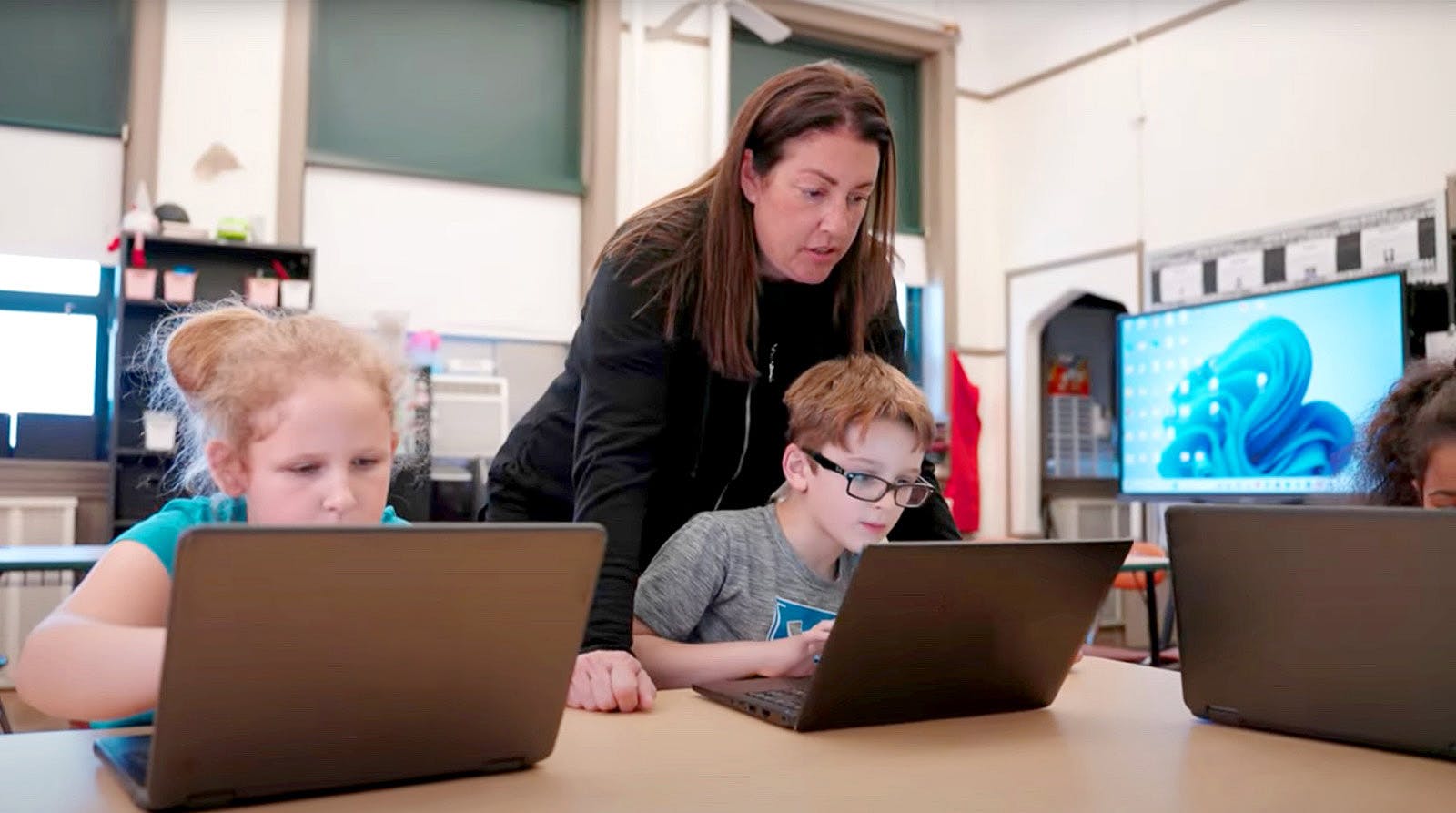
Two students being supervised by a teacher

Math in real life

The future of math education isn't confined to classrooms or textbooks. It's about empowering students to apply their mathematical knowledge to real-world challenges. From finance and engineering to healthcare and technology, math is the bedrock on which advancements are built.

Students armed with mathematical skills can navigate the complexities of modern life with confidence. They can interpret data to inform decisions, design sustainable solutions, and contribute to technological breakthroughs that shape the future.

Making math engaging and relevant is the key to helping students understand its real life application. Learn more on engaging math classrooms on our dedicated page.

Carving out a path forward

The future of math education is a journey of possibilities. By embracing technology, nurturing essential skills, and emphasizing real-world application, educators can prepare students to thrive in an increasingly complex and interconnected world. Together, we're shaping a new generation of math learners who not only understand the language of numbers but are also poised to become leaders, innovators, and problem solvers.

Tools that support technology in math education

The right technology can help bring math into the digital space in ways that are accessible, flexible, and practical for both students and teachers.

Equatio logo

A digital math tool that lets students type, handwrite, or speak math. It supports visualisation, graphing, and collaborative work, helping students engage with math concepts digitally across devices and learning environments.

Equals Mathematics logo

A multi-sensory math curriculum that combines hands-on learning with digital support. It helps students build understanding through concrete models, visuals, and structured progression, supporting technology-enabled math instruction.

Other topics on teaching and math learning

Further insights and resources

Find free webinars, blogs, guides and more on learning and teaching tools and strategies.