
Summary
Since adopting a sitewide licence in 2022, Charles Darwin University has made Read&Write a central part of their inclusive learning support. The toolbar’s most widely used features, such as Text-to-Speech, Simplify Page and Audio Maker, help students engage with course content and study more efficiently. The impact extends beyond students registered with disability services, supporting diverse learning preferences across the university community.
Since 2022, Charles Darwin University has had a sitewide licence to Read&Write, making it available to all students regardless of access need. The most-used feature on campus is text-to-speech.
 Read&Write
Read&Write has shifted inclusion at CDU by embedding easy-to-use tools into everyday learning, giving all students the confidence and support to fully participate from the outset.”
Background
Charles Darwin University (CDU) is a public university based in the Northern Territory of Australia, serving a diverse student population across multiple campuses and online learning environments.
In 2022, as part of its commitment to inclusive education, CDU adopted a sitewide Read&Write licence. This made assistive technology available to all students, not just those registered with disability services. The university recognised that flexible learning tools could help all students to work more effectively.
Read&Write plays an important role in removing accessibility barriers and supporting inclusive learning."
The challenge
Students arrive at university with a wide range of learning needs, preferences and experiences. While some students are formally registered with accessibility or disability support services, many others encounter challenges with reading comprehension, processing large volumes of information, or managing cognitive load during intensive study periods.
One challenge at CDU was the lack of accessibility support available to eligible students during exams. These students would spend additional time and mental effort decoding text, leaving less capacity to focus on understanding content and demonstrating their knowledge.
The team at CDU wanted to find a robust solution that would fulfil their key accessibility requirements while offering additional learning support to the wider student cohort. That’s when they found Read&Write.
Choosing Read&Write
The team at CDU were impressed with how Read&Write improves engagement with course content, helping students work more effectively and efficiently.
“When we introduce students to its functions, many express surprise that such a comprehensive ‘one-stop-shop’ exists to support their learning,“ says Access and Inclusion Advisor, Chloe Hay.
Read&Write is fully equipped to support everyday study challenges, from reading dense academic texts to maintaining focus and managing workload.
“By removing accessibility barriers, Read&Write has helped students feel more confident and in control of their learning,” says Ace Bista, Digital Accessibility Project Officer. “It supports greater independence, as students can choose how they access and process information.”
Students who are eligible for exam access arrangements have reported that using Read&Write during exams made the experience significantly less stressful and easier to manage.
“During our exam period,” explains Ace, “we had several students using assistive technology, and they benefited significantly from Read&Write. In particular, the text-to-speech feature was very helpful for students who process information better by listening. This is currently not automatically integrated into our LMS, so Read&Write filled an important gap. It allowed students to better understand exam questions and reduced cognitive load during a high-pressure situation.“
Without Read&Write, many students who rely on alternative ways of accessing information would face significant barriers. Given how critical exams are, this could negatively impact their performance and overall academic success.”
Recognising the need to provide flexible learning tools that support diverse learning preferences, the university made the decision to expand access sitewide.
Impact across the student population
The benefits of Read&Write at CDU extend beyond students with formal accessibility requirements.
“I’ve worked with many students who are not formally registered with Access and Inclusion services but have booked 1:1 sessions to learn Read&Write,” observes Ace. “Many of these students have found the tool very useful and continue to use it independently.”
Read&Write is now an important part of the university’s Accessibility Action Plan. Making it available to all students was purposeful, as it supports the university’s Universal Design for Learning approach. Chloe explains further: “It’s shifted the culture at CDU from a reactive model to a proactive one, embedding support from the outset rather than only in response to individual requests.“
Read&Write brings this vision of inclusive education to life by embedding support directly into the learning environment.”
As such, the university has seen strong uptake among students who are not registered with Access and Inclusion services. These students use Read&Write to support different learning preferences, study more efficiently and engage more deeply with course materials.
Widening access campus-wide has enabled students to choose how they access information. And since staff also have access to Read&Write, Chloe has found that they are familiar enough with the tool to confidently recommend it to students. The most frequently used feature among CDU students is Text-to-Speech, as it helps students who prefer auditory learning or who struggle with reading large amounts of text.
Features like Simplify and Audio Maker are especially popular, helping students engage more effectively with their learning materials.”
Another valuable feature is Simplify, which students can use to remove distractions, adjust texts to suit their reading preferences, and reduce eye strain. All this helps to support focus and improve comprehension of complex texts.
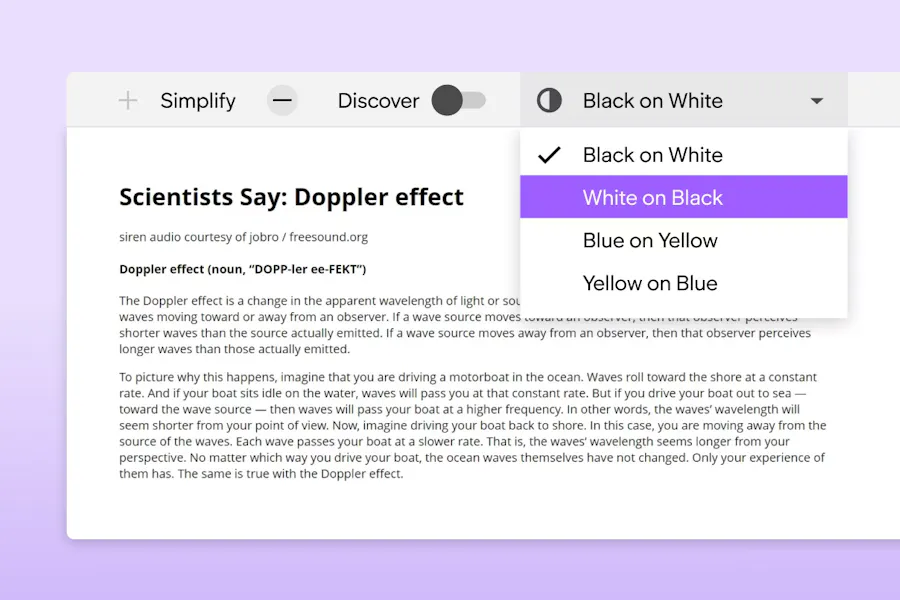
By making Read&Write available to every student, CDU has embedded accessibility into the everyday learning experience, rather than treating it as a specialist support service. The result is a more inclusive environment where students can access information in ways that work best for them, build confidence in their academic abilities and study more independently.
What advice would the team at CDU give for a successful rollout? “Take the time to explore the Read&Write demos and resources,“ says Chloe. “The tools are simple to understand, and building familiarity will make it easier to contextualise their value in conversations with students and confidently recommend them.“
Whether supporting students with formal access arrangements or those simply looking for more effective ways to learn, Read&Write continues to play an important role in helping CDU create opportunities for success across its student community.

EDUCATION SOLUTION
Find out more about how Read&Write can support your students.