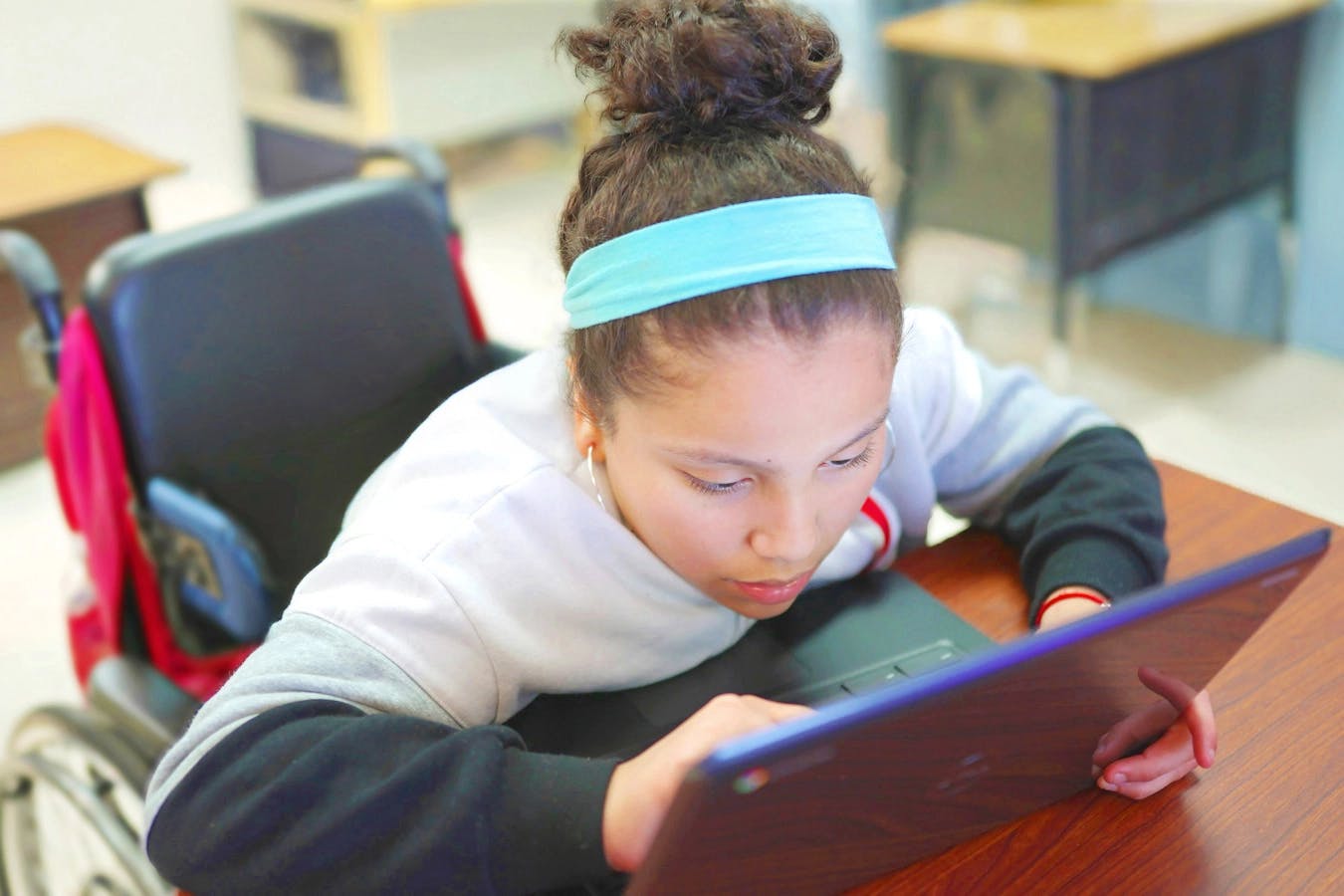
Most special education teachers are familiar with and comfortable writing IEP goals to address the academic needs of their students. After all, helping them succeed academically is the backbone of the work of special education.
Sometimes, however, students struggle in school, not simply because of academic deficits but because they lack other critical skills or face additional challenges that impede success. To help them become more independent and perform to the best of their abilities, we must address these areas of need alongside their academic ones.
Here are some of the additional challenges that many of our students face:
- Auditory processing (the ability to understand or process verbal language)
- Executive functioning (the ability to plan, focus attention, or organize thoughts)
- Time management and transitioning (the ability to effectively utilize and understand the passage of time)
- Reliance on routines (the need for predictability and stability; difficulty with changes)
- Communication and self-advocacy (the ability to express wants and needs)
- Emotional regulation and management (the ability to modulate responses to feelings or emotions appropriate to social norms)
As you read this list, some of your students likely come to mind. Think about how challenges in these areas impact your students daily, and then take a look at the following suggestions to get some ideas about how to better address those needs through their IEPs.
Unique Learning System provides educators with ready-made resources for specially designed instruction.
Helping (students) succeed academically is the backbone of the work of special education.
Writing SMART IEP Goals
When writing IEP goals for students with unique learning needs, the best practices for writing SMART goals apply (Specific, Measurable, Attainable, Relevant, Time-bound).
By its very definition, an IEP is intended to present goals that are specific to an individual student’s needs. The real work begins with determining those unique needs and crafting an IEP in clear language that can be easily understood by all educators and caregivers who interact with them.
Determining the areas of need begins with the Present Levels of Academic Achievement and Functional Performance (PLAAFP) developed by the entire IEP team. Areas of need must have a corresponding goal in the IEP.
Because this foundational component is also informed by formal and informal assessments, it should identify the student’s specific needs and their strengths—both are critical to developing short-term objectives and annual goals.
What makes a goal specific?
Each goal should state specifically the targeted skill and what the child is expected to do in order to reach the agreed-upon level of mastery – which leads us to measurement.
How are goals measured?
In order to ensure that the student is making progress, each goal is associated with measurement criteria for demonstrating mastery. Many states require an indication of how the data will be collected for each one.
Depending on the goal, the measurement might be a percentage of accuracy or frequency of successful attempts.
As part of the criteria, the goal should detail the conditions under which the student is performing the work. For example, how many prompts do they require from the teacher? Is the student one-on-one with a teacher during the attempts or in a group setting?
What makes a goal attainable – and why is this important?
Goals should be developed with the intent of increasing independence so that a student continues on a path to chronological grade-level skills and standards. To ensure the student experiences incremental success and builds the confidence that is so important to learning, the team should carefully determine what the student can achieve.
What is meant by a relevant goal?
Relevant means that the goal is individualized to the student, as well as meaningful to and realistic for the student’s success. If a student currently has a five-word expressive vocabulary, the goal should not be that they exchange conversation with complete sentences.
In other words, there is no copying and pasting of goals from one child’s IEP to another one! In the case of a student with a communication disorder, the question to guide relevancy might be, “How will improving their responsiveness to a teacher’s gesture or prompt improve their choice-making?”
What is a typical timeframe for a goal?
Specifying a time by which a student will accomplish a goal ensures accountability and gives a means to monitor progress at certain intervals. Most often, goals are written to be attainable within one year. Legally, IEP goals must be reviewed at least once per year by the IEP team. If goals need to be adjusted more than once per year, parents or the school can request an IEP team meeting in which this can be accomplished.
Where do objectives fit into IEP goals?
Objectives are smaller or interim goals that lead to achieving the overall IEP goal within a given timeframe. For example, if the goal is that a student will correctly solve double-digit addition problems with carrying, then a short-term objective may be that the student will visually represent regrouping by placing the digit in the tens column.
Under the 2004 Amendments to IDEA, the inclusion of short-term objectives is no longer mandated for students with disabilities assessed using general education standards. For those who are working on extended standards and taking the alternative assessments, IDEA states that objectives or benchmarks are required with each individual goal.
Please note that some states require short-term objectives for each individual goal regardless of whether they are on general or extended standards. Reach out to your district for more information.
Create, implement and monitor IEPs tailored to each student’s needs with Polaris. Saving time by generating present level statements and suggesting SMART goals based on assessments.
Students who rely on routines can really benefit from having a consistent way to access information about their day
Putting it all together
One simple guideline for drafting an IEP goal that includes all the necessary components is to create a template:
When given [instruction or task, etc.], the student will [demonstrate skill or behavior, etc.] with ____% accuracy in ____ out of ____ trials [within a given time period].
Now that we’ve covered how to make IEP goals SMART, we’ll explain how to set goals for students by the specific additional challenge they face.
Auditory processing
Students with auditory processing challenges may not clearly understand directions or process the information a teacher is verbally presenting even when they understand the actual content. When students have auditory processing deficits, they might appear as if they were choosing not to follow directions or complete assignments, when in reality they were simply not able to keep up with the pace of the lecture or comprehend the language the speaker is using.
Because students’ receptive language or processing skills may not match their cognitive abilities, we must teach them alternative ways to gain needed information, allowing for greater independence and success. They may need a variety of visual supports (visual cues that give the learner additional concrete information about the expectations, activity, or skills being taught) to better understand both academic material and classroom expectations.
But we need to teach students the most effective ways to utilize the supports we give them. This is best achieved through writing IEP goals like the ones below. Remember that all of them should be individualized for each student, but these examples will give you starting points.
Sample goals for auditory processing
Using a checklist or work system
When given a color-coded folder system with assigned activities or tasks organized in each folder, Marta will independently complete at least 4 assignments on 6 out of 8 days by September 15, 2021.
Note-taking
When given a note-taking template, Terrence will independently take notes during a class lecture/discussion in 8 out of 10 trials by September 1, 2021.
Executive functioning
For students who have a difficult time planning, following directions, or managing materials, write IEP goals to address improving these skills. Often students need direct instruction and visual supports to follow specific sequences, to keep track of school tools and materials, and to start their work, remain on task, and turn it in when finished.
Sample goals for executive functioning
Independently starting work
When given a visual checklist, Izzy will independently follow all steps (review and check for understanding of the instructions, gather needed materials, and ask for help only after attempting to start work) to begin a classwork assignment in 4 out of 5 consecutive trials by September 1, 2021.
Turning in homework
When given a visual cue, Robert will independently turn in homework by the assigned due date in 4 out of 5 trials by April 11, 2021.
Time management and transitioning
Many students have difficulty tracking the passage of time, managing their time, or shifting their attention from activity to the next. Visual supports like schedules, calendars, and reminders to wait or that it’s time to transition can help clarify when events will take place or when to stop an activity and shift attention to the next one. IEP goals for learning how to utilize these visual supports can maximize independence and promote overall success.
Sample goals for time management and transitioning
Waiting
When given a visual reminder and various suitable waiting activities (i.e., Play-Doh, squishy ball, sensory beads), Jessica will quietly and appropriately (i.e., sit or stand in designated area, keep hands to self) wait for an upcoming event for a minimum of 30 seconds in at least 8 out of 10 trials by September 1, 2021.
Transitioning with a countdown cue
When given a visual countdown cue to signal the end of a preferred activity, David will independently put materials away and transition to the next activity on his schedule within one minute in at least nine out of 10 trials by December 1, 2021.
Reliance on routines
Students who rely on routines can really benefit from having a consistent way to access information about their day and by going through an established routine for making transitions. Additionally, teaching students how to adjust to schedule changes and interruptions and how to cope with new and different situations can be critical to student success.
Sample goals for reliance on routines
Adapting to changes to schedule
When given a visual schedule and a “change card” signifying that a change has been made to the schedule, Grace will independently transition to the new activity within 1 minute in at least 8 out of 10 trials by March 1, 2021.
Leaving unfinished work for later
When given a social narrative and visual reminder, Sally will quietly and independently leave her unfinished work to complete at a later time by using a designated marker to denote where to begin again in at least 8 out of 10 work sessions by May 1, 2021.
Communication and self-advocacy
Some students have difficulties communicating their needs or advocating for themselves throughout the day. These challenges can result in frustration and confusion. Write goals to teach your students how to more easily communicate their wants, needs, and critical personal information to enhance independence and overall success.
Sample goals for communication and self-advocacy
Making a choice and communicating a request
When given a visual choice board, Antonio will independently make a choice and communicate a request to a partner in at least 6 out of 8 trials by September 1, 2021.
Providing personal identification
When given a visual cue, Lily will independently provide personal information as practice for an emergency situation (e.g., being lost or injured) to designated adults within the school building in at 8 out of 10 consecutive trials by November 1, 2021.
Emotional regulation and management
Finally, as a result of many of the above challenges, students may additionally exhibit negative behaviors due to increased frustration and anxiety. Instruction and the use of visual supports can alleviate anxiety and therefore, serve as a prevention tool. It’s also helpful to write goals to teach students proactive ways to regulate their emotions and to advocate for and get the emotional support they need.
Sample goals for emotional regulation
Asking for a break and following break rules
When given a break card, Fred will independently ask for a break in at least 8 out of 10 trials by September 1, 2021.
Learning and practicing a calming routine
When given a visual sequence of a calming routine, Joshua will independently follow the steps of the routine with 90% accuracy in at least 4 out of 5 trials by October 1, 2021.
As you are writing IEP goals for your students this year, make sure to consider their challenges more holistically. Do they have auditory processing needs, executive functioning issues, time management difficulties, or communication challenges?
Do they struggle when routines change or when negative emotions arise? All of these issues can ultimately impact their success at school. By writing goals similar to the ones above, not only will you create more comprehensive IEPs, but you will likely have a greater impact on your student’s long-term independence and academic success.
Using Everway tools to support IEP goal-setting
We support learners from early years to higher education with education software that helps teachers create neuroinclusive classrooms and give students simple ways to read, write, plan and take part.
Unique Learning System's Goals, Preferences, and Skills (GPS) is a strong starting point. When completed by the IEP team with fidelity, the K-12 Student Learning Profile provides a reliable source to inform present levels of performance. Pair this with Daily Scores and Observations, the L3 Skills Play Report, and the Positivity Core Behavior Profile Report to build a well-evidenced PLAAFP.
When it comes to identifying and setting goals, use Benchmark and Checkpoint results alongside Daily Scores and Observations to determine what is attainable for each student. Positivity's Core Behavior Profile adds valuable context when considering behaviour-related goals. Together, these data points help your team make informed, confident decisions.
For tracking, add academic-related goals to the Individual Skills Tracking area of the GPS and set an aim line to monitor progress. For behaviour goals, Positivity's Core Behavior Profile and behaviour tracking cover both interfering and prosocial behaviours.
If progress starts to fall behind, the resources on Unique Learning System's Individual Skills Tracking page can help identify next steps. L3 Skills provides targeted skills-based practice, and Positivity lets you assign evidence-based strategies to keep students moving forward.