
This page summarizes studies published in November 2025. It reflects findings from a specific time window and is not intended as a comprehensive review of the literature on this topic.”
With particularly strong outcomes for neurodivergent and multilingual learners when used routinely in the classroom.
This research supports school and district leaders, educators, and inclusion leads in building neuroinclusive learning environments and making informed, effective decisions.
Key findings from the research
The following findings are drawn from peer-reviewed studies and sector research on assistive technology and neuroinclusive practice.
- Assistive technology and digital tools can improve participation and communication, but impact depends on how tools are used day-to-day
- Teacher confidence and digital competence are key drivers of success
- Classroom conditions matter for whether tools are used effectively. Studies highlight that design fit, teacher support, and learning context all shape whether assistive technology reaches its potential
- Digital tools that offer multiple ways to access and respond to content, including audio, visual, and language support features, are described in research as reducing barriers for learners with varied needs. Evidence on this comes primarily from reviews and design studies rather than direct outcome measurement
- Studies describe assistive technology as most meaningful when it is part of how students access and engage with learning generally, rather than being reserved for specific assessment or support contexts. However, the evidence base for this pattern across these studies is observational rather than experimental
Why this matters for teachers and students
When assistive technology is part of everyday instruction, support becomes predictable rather than reactive. Students do not have to wait for individual accommodations to participate. They have consistent ways to access content and express their understanding.
For educators, this reduces the need for one-off adjustments and helps build routines that work for the whole class. Over time, this is associated with more consistent participation, fewer barriers, and stronger neuroinclusive practice across classrooms.
What this looks like in schools and classrooms
Research highlights several strategies that support consistent, neuroinclusive use of assistive technology. In practice, this may include:
Practical takeaway | What to do and how |
|---|---|
Integrate assistive technology into everyday routines | Use assistive tools during regular classroom activities such as reading, writing, planning, and responding to questions. Avoid limiting their use to assessments or pull-out supports |
Building teacher confidence | Provide practical training and coaching so teachers feel confident selecting and using tools consistently in daily instruction |
Enable multimodal expression | Offer multiple ways for students to engage and respond, including audio, speech-to-text, translation supports, and scaffolded writing tools |
Create enabling conditions | Establish predictable routines, allow planning time, and set clear leadership expectations so neuroinclusive practices are consistent across classrooms |
Successful implementation in education
In schools where assistive technology is used consistently, studies highlight common patterns in effective classroom practice:
- Assistive technology is part of everyday learning tasks, not only formal accommodations
- Teachers have received practical training or coaching
- Classroom routines support consistent use of assistive technology
- Learners have multiple options for expression
- Leaders set expectations and time for planning
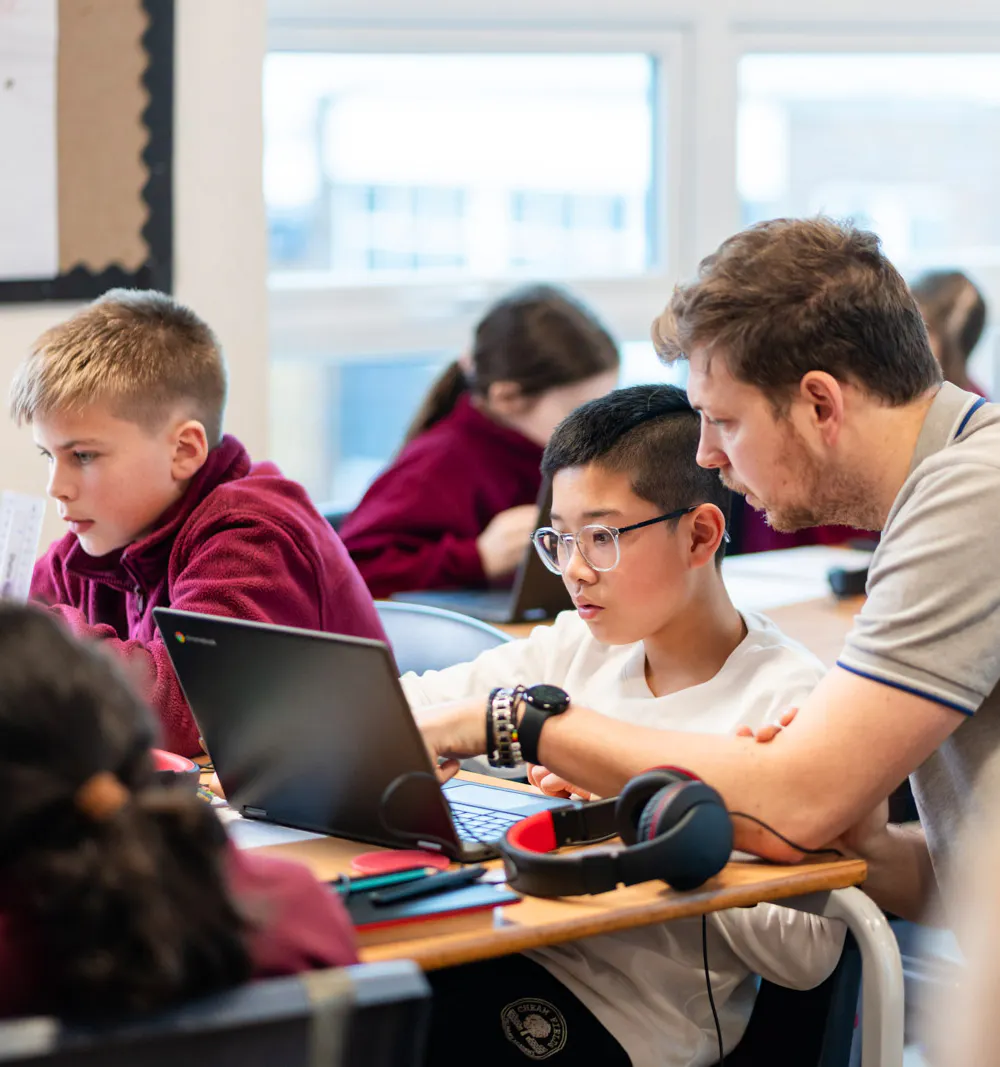
Built into daily literacy routines
Assistive tools used by the whole class during planning, drafting, and revision. Students can choose supports such as text-to-speech or speech-to-text as part of regular instruction.
Studies suggest:
Embedding tools into everyday routines is linked to reduced stigma and broader access to content and expression.
Supported by predictable routines
Teachers introduce tools and reuse them across activities and subjects. Learners become familiar with when and how supports can be used.
Studies suggest:
Consistent routines are linked to greater student independence and less one-off accommodations.
Designed for multiple ways to participate
Lessons allow students to read, write, speak, listen, or organize ideas using digital tools. These options are available to all learners.
Studies suggest:
Multimodal participation is associated with stronger engagement for multilingual learners and students with varied learning needs.
Long term results
Evidence suggests that when assistive technology is embedded in everyday instruction, neuroinclusive practices are more consistent and less dependent on individual accommodations. This approach may support more sustainable inclusion across classrooms and schools.
What this means for education leaders
School and district leaders | This research highlights the importance of investing not just in tools, but in the conditions that support their everyday use, such as training time, routines, and leadership expectations |
|---|---|
Educators and teachers | Reinforces the value of using assistive technology as part of daily instruction, rather than reserving it for individual accommodations or assessments |
Inclusion leads and policy makers | Highlights the need for system-level consistency so neuroinclusive practices are available across classrooms, not dependent on individual teachers. |
- Utami, I. S., Ghufron, A., & Ishartiwi. (2025). Professional Development in Digital Competence for Special Education Teachers: A Systematic Review. Electronic Journal of E-Learning, 23(4), 53–68. https://doi.org/10.34190/ejel.23.4.4273
- Jakovchevska, A., & Chichevska Jovanova, N. (2025). Innovative and Handcrafted Low-Tech Assistive Tools: The Experiences of Kindergarten Educators and Their Role in Early Childhood Development. Multidisciplinarni Pristupi u Edukaciji i Rehabilitaciji, 7(10), 44–56. https://doi.org/10.59519/mper7204
- Noori, S., & Baroud, J. (2025). Leveraging EdTech in Creating Refugee-Inclusive Classrooms in Canada. Education Sciences, 15(11), 1473. https://doi.org/10.3390/educsci15111473
- Simos, C., & Katsiampoura, I. (2025). The Use of Digital Tools to Enhance Inclusion in the Classroom. World Journal of Advanced Engineering Technology and Sciences, 17(1), 465–477. https://doi.org/10.30574/wjaets.2025.17.1.1446
- Anapey, G. M., Obeng-Treve, E., Ahwireng, D., & Aheto, S.-P. K. (2025). Neurodiverse Children Learning Needs Assessment for Digital Inclusion in Mainstream Education. SAGE Open, 15(4). https://doi.org/10.1177/21582440251395452