The Frayer Model is a four-square graphic organizer designed to build deep vocabulary understanding. Developed by Dorothy Frayer and her colleagues at the University of Wisconsin in 1969, it helps learners engage with new words through definitions, characteristics, examples, and non-examples. For students with unique learning needs, it offers a structured, multi-sensory approach to language and literacy that goes far beyond memorisation.
In this blog, we explore how the Frayer Model works, why it is particularly effective for neurodiverse and unique learners, and how digital tools can bring it to life in special education and inclusive learning practices.
What is the Frayer Model?
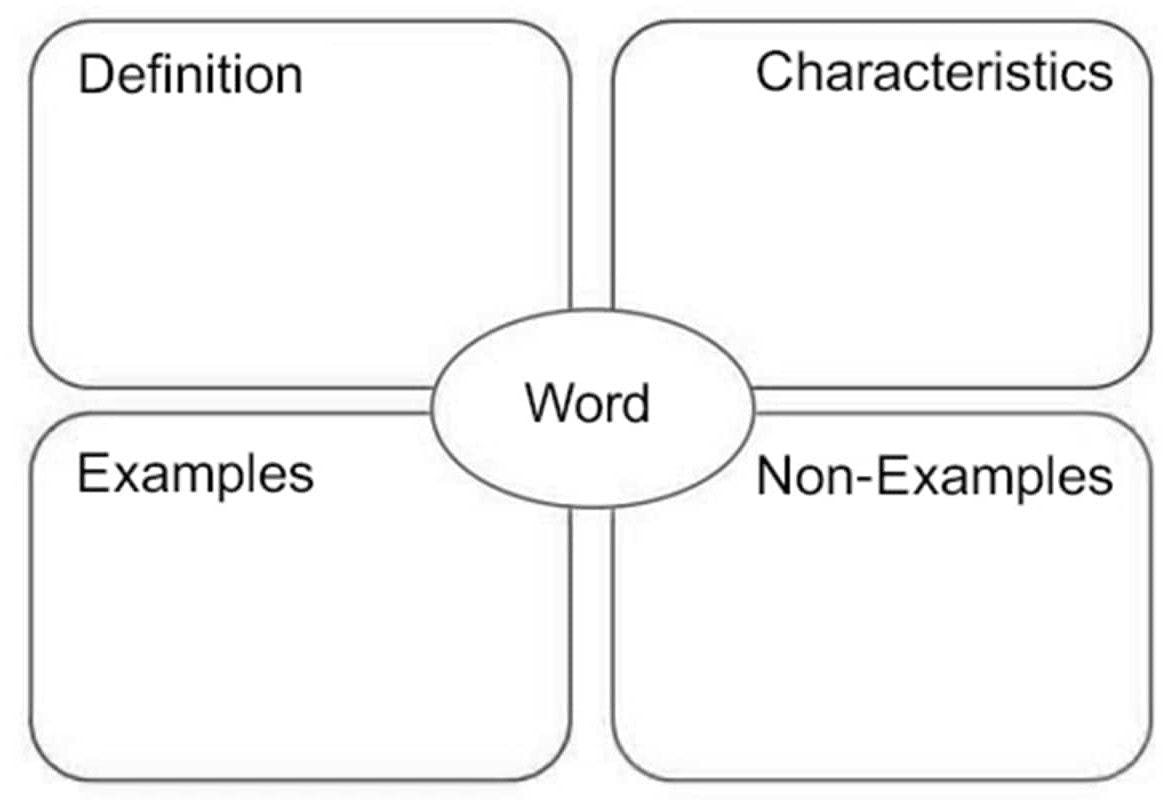
The Frayer Model is a graphic organizer used for word analysis and vocabulary instruction. Students place a single vocabulary word in a central oval, then complete four surrounding sections:
- Definition: what the word means in their own words
- Characteristics: key attributes or features of the word
- Examples: instances where the word applies
- Non-examples: instances where the word does not apply, which sharpens understanding by contrast
This structure encourages higher-order thinking. Students are not simply asked to copy a definition; they are asked to explore a word from multiple angles, generating meaning rather than just receiving it.
How did the Frayer Model come about?
Dorothy Frayer and her team at the University of Wisconsin developed the model in 1969 with a clear goal: to help students learn vocabulary more efficiently and with greater retention. They recognised that traditional vocabulary instruction, which often involved copying definitions from a dictionary, did not build the kind of flexible word knowledge that learners need to use language with confidence.
Over fifty years later, the model remains one of the most widely used vocabulary strategies in education. Its longevity reflects something important: when students are given a structure that invites them to think carefully about words, the learning sticks.
Why the Frayer Model works for diverse learning needs
The Frayer Model is effective precisely because it does not rely on a single way of knowing. Students can engage with vocabulary through writing, drawing, discussing, or a combination of all three. This flexibility is at the heart of neuroinclusion: designing learning experiences that work for everyone from the start, rather than retrofitting support for those who need it most.
For students who process language differently, including those with dyslexia, ADHD, autism, or other learning differences, the Frayer Model offers several meaningful advantages:
Its predictable four-part structure reduces cognitive load and makes expectations clear
The option to include illustrations and symbols means students are not limited to written responses
The non-examples section is particularly useful for learners who benefit from understanding what something is not, as well as what it is
Its visual layout supports learners who process information more effectively through spatial organisation
Research from the Center for Applied Special Technology (CAST) supports the idea that multi-modal learning, where students can hear, visualise, and interact with content, leads to deeper and more durable understanding. The Frayer Model puts that principle into practice.
Using the Frayer Model in special education classrooms
In special education settings, vocabulary development is often a priority because language comprehension underpins progress across every area of the curriculum. The Frayer Model is well-suited to these contexts because it adapts to where students are, rather than expecting students to adapt to a fixed approach.
Teachers working with students at different levels can use the same framework with differentiated content. A student working at a pre-literacy level might illustrate their four sections using symbols or pictures, while a more advanced student produces written descriptions. Both are participating in the same meaningful vocabulary activity.
The Frayer Model also works well alongside movement-based learning. Large sticky notes placed around the room, each representing one of the four sections, allow students to move between them, contributing their thinking and reading each other's responses. Collaborative vocabulary learning of this kind builds both academic skills and the kind of shared understanding that supports connection in the classroom.
Ways to use the Frayer Model in your classroom
- Introducing new vocabulary before a unit begins
- Building comprehension of characters or concepts within a text
- Reviewing vocabulary ahead of a test or assessment
- Supporting students in developing independent word-learning strategies
- Creating differentiated vocabulary activities across ability levels
Digital tools that support the Frayer Model
The Frayer Model can be delivered using paper and pencil, a whiteboard, sticky notes, or digital formats. For students with unique learning needs, digital tools and education software often provide the most flexible and accessible experience, particularly when they include built-in support for reading, symbols, and differentiated content.

News2you is a symbol-supported newspaper that helps students with unique learning needs connect to the world around them. It provides differentiated, current events content with reading comprehension and vocabulary activities built in.
News2you pairs naturally with the Frayer Model. Students can take target vocabulary from their weekly newspaper, apply the four-section framework to explore each word in depth, and build comprehension while developing language skills. The symbol support within News2you means students who are not yet reading independently can engage meaningfully with vocabulary at their own level.

Unique Learning System (ULS) is a comprehensive special education curriculum that provides differentiated, standards-aligned content for students from Pre-K through transition. It includes ready-to-use lesson resources, data reporting, and built-in support for IEP goal tracking.
Vocabulary instruction is woven throughout ULS lesson frameworks, and the Frayer Model integrates directly into how teachers approach new terms with students. Because ULS content is differentiated across multiple levels, teachers can support students with widely varying needs within the same lesson structure, making it ideal for inclusive and resource room settings alike.