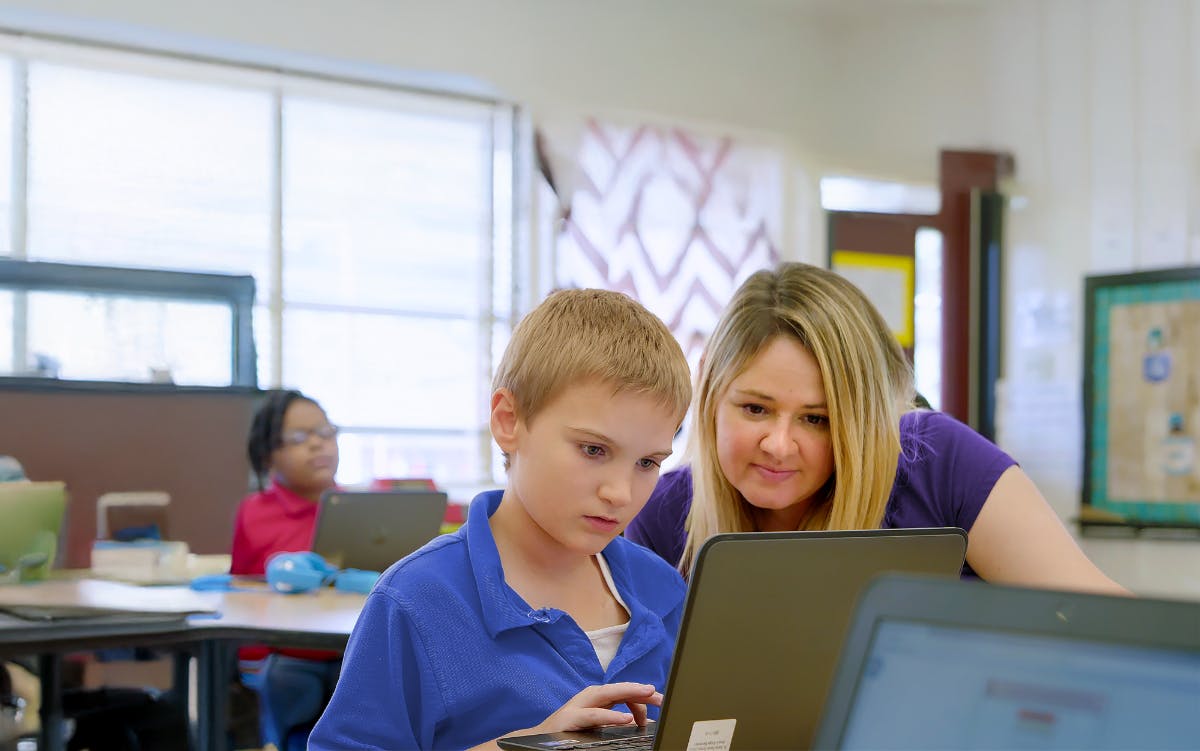
At Wapello Community School District in southeast Iowa, understanding how students read is the starting point for better support.
By using uPar as a universal literacy screener across grades 3–12, the district has moved from a more reactive accommodations process to a proactive, data-led approach.
The result is a clearer view of student reading needs across the district, including students who may not have been identified through traditional IEP or 504 pathways.
For Wapello, the value of uPar is not just in identifying who may need support. It is in helping educators and students understand what kind of support can make a difference, including when students may benefit from text-to-speech through Read&Write.
This shift is helping Wapello make more informed decisions, support more students, and give learners greater confidence and ownership.
Wapello Community School District serves students in southeast Iowa and uses uPar as part of a district-wide approach to understanding reading needs and connecting students with the right support.

The challenge
Before uPar, identifying which students needed reading support was more limited.
Decisions around accommodations were typically based on formal plans like IEPs and 504s. This meant some students could be harder to identify, especially those just below proficiency, struggling with reading stamina, or losing focus during longer passages.
The district needed a clearer, more consistent way to:
- Understand how students read
- Spot hidden barriers to comprehension
- Identify students who may benefit from text-to-speech support
- Make informed, defensible decisions about accommodations
The goal
Wapello wanted to move from a reactive accommodations process to a more proactive model of support.
Instead of waiting until students had already been formally identified, the district wanted a way to see reading needs earlier, use data consistently, and make support decisions with greater confidence.
The goal was not only to identify more students. It was to understand what kind of support could help each student access grade-level text, stay focused, and show what they know.
The solution
Wapello introduced uPar as a universal reading screener, administered each fall to all students from grades 3 through 12.
This gave the district a consistent, data-driven view of reading needs across the student population. Instead of relying only on existing documentation, educators could use uPar data to better understand how students performed with and without support.
Educators use uPar data to:
- Identify students who may benefit from additional reading support
- Guide decisions around text-to-speech accommodations
- Connect students with tools such as Read&Write when appropriate
- Support more consistent decision-making across the district
Just as importantly, the process created space for student voice and choice.
"This is one way for students to learn about themselves as learners and see what works best for them."
Shannon Salazar
PreK–12 Curriculum Director, Wapello Community School District
Students are not simply assigned support. They are given insight into how they read and the opportunity to reflect on what helps them succeed.
The impact
One of the most significant impacts of uPar has been identifying students who fall outside traditional support systems.
Some students were not flagged by uPar as needing support, but still asked to use text-to-speech because they knew it helped them focus. That matters. It shows that students were not only receiving support, they were developing self-awareness about how they learn best.
This is where Wapello’s approach reflects a broader principle: text-to-speech may be necessary for some students, but useful for all.
For students who struggled with long passages, reading stamina, or staying focused on screen, having access to text-to-speech through Read&Write helped make grade-level text more accessible.

I can concentrate so much better. I don’t get lost in long passages.
Students experienced the difference for themselves
Sixth grade became a particularly important moment for Wapello.
According to Shannon, sixth graders provided some of the strongest feedback because text-to-speech becomes available on the reading assessment at that level. That created a clear opportunity for students to compare their experience with and without support, and to explain what helped them focus, understand, and perform with more confidence.
Their feedback gave educators a practical view of how text-to-speech was supporting real students in real assessment conditions.
It also helped reinforce the value of using uPar data alongside student voice. The data helped identify need, while student feedback helped confirm how the support was experienced.
More informed support decisions
Wapello’s use of uPar has strengthened confidence at a system level.
When the district needed to explain its use of accommodations, the team could show that decisions were based on:
- Universal screening data
- A consistent process
- Evidence of student need
- Student experience and feedback
This helped make support decisions clearer, more consistent, and more defensible.
Academic growth
By comparing uPar insights with Iowa assessment results, Wapello has seen evidence of growth across shared student examples.
In the data reviewed:
- Multiple students improved by 40–80+ points in ELA scores
- Some students showed gains of 50+ points in a single year
- Others moved closer to proficiency, even if they did not reach a new performance level
While growth varied by student, the examples showed that students using support were making progress, and that uPar gave the district a more reliable way to understand and act on student need.
Better focus and assessment experience
Students reported that having the right support helped them:
- Stay focused during long assessments
- Reduce fatigue when reading on screen
- Engage more fully with grade-level text
- Feel more in control of their performance
This was especially important as assessment demands increased in middle school and students encountered longer, more complex reading tasks.
Increased confidence
One of the strongest outcomes was how students felt when they had access to the support they needed.
I feel much more confident because I had the support I needed.
Student, Wapello Community School District
For students, confidence was not separate from performance. It shaped how they approached reading, testing, and their own learning.
When students understood what helped them, they were better able to advocate for themselves and use support with purpose.
Positive parent response
Wapello also saw a positive response from families.
Shannon expected there could be some pushback from parents. Instead, the reaction was warm and supportive. Some parents said things like:
I wish I would have had this when I was in school.
Parent, Wapello Community School District
That response helped reinforce the value of the district’s approach. Families could see that support was not about lowering expectations. It was about giving students access to the tools they needed to engage with grade-level text and show what they knew.
Benefits that Wapello saw with uPar
- Earlier identification of student reading needs across grades 3–12
- More consistent, data-led support decisions
- Students identified beyond traditional IEP and 504 pathways
- Stronger student self-awareness and confidence
- Better insight into when text-to-speech support may help
- Positive feedback from students, families, and staff
- Evidence of academic growth across shared student examples
Wapello’s story shows what happens when insight comes first
More students are identified earlier. More students understand how they learn. And more students can access the support that helps them focus, engage with grade-level text, and build confidence.
By using uPar as a universal screener, Wapello has created a more proactive way to connect students with the right support, including text-to-speech through Read&Write, and make decisions grounded in data, consistency, and student voice.
Because when we understand how students learn, we can support them in ways that help them succeed.