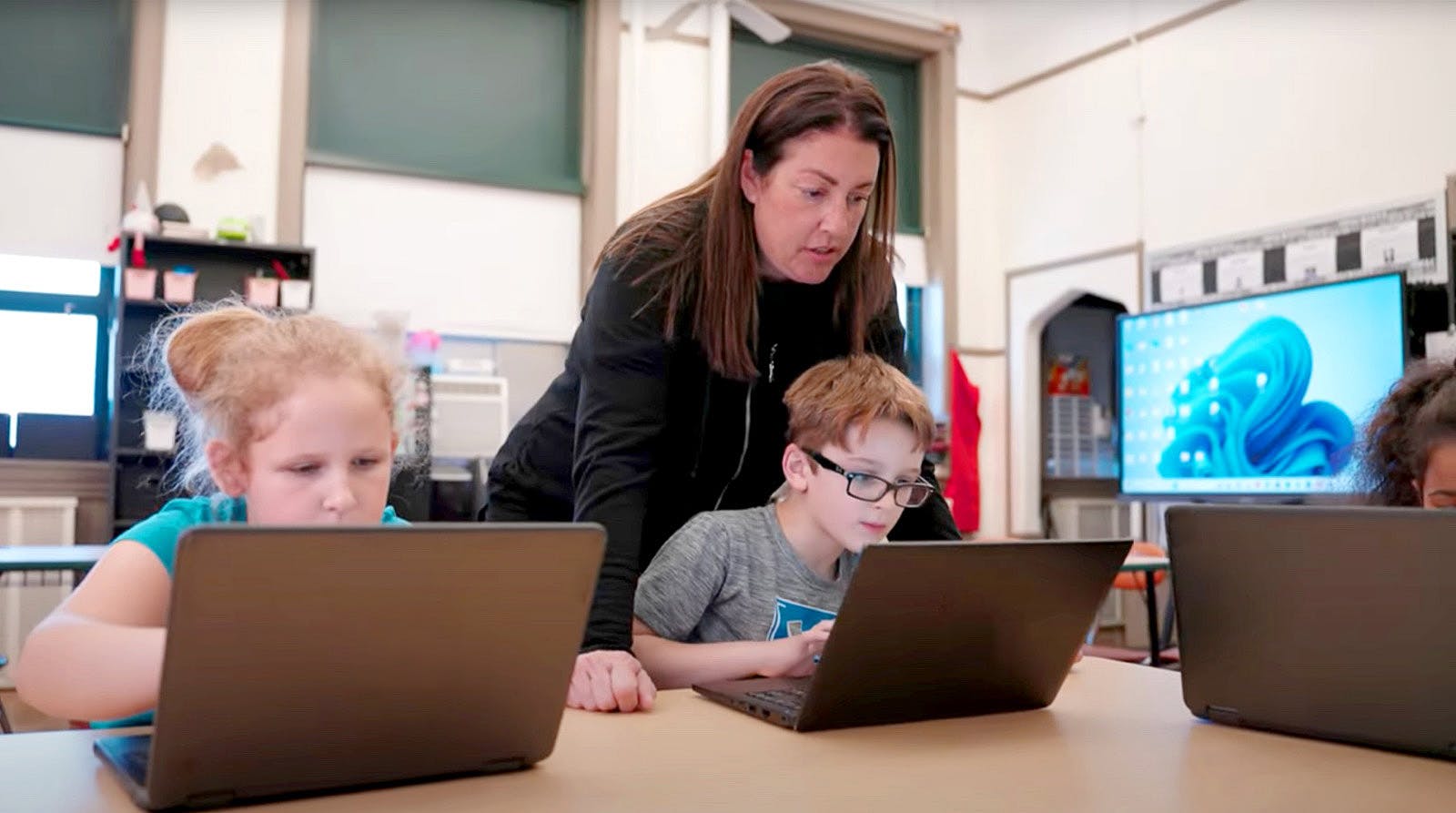
How can we make sure our classrooms and our teaching reflect what the Danielson Framework for Teaching describes?
For many teachers, principals and instructional coaches, the framework shapes observations, coaching conversations and annual evaluations. The good news is that you don't need a complete overhaul to align with it. Small, consistent habits across each domain make a real difference for students and for your evaluation.
Below, we share eight practical tips mapped to the four domains of the framework, followed by a look at why teacher evaluation rubrics like the Danielson rubric matter for whole districts, not just individual classrooms.
What is the Danielson Framework?
The Danielson Framework for Teaching is a research-based model of effective teaching created by Charlotte Danielson and maintained by the Danielson Group. It organizes teaching into 4 domains and 22 components, giving educators and evaluators a shared language for observation, feedback, coaching and professional growth.
First published in 1996, the Danielson Framework for Teaching has been updated several times. The latest version, released in 2022, still has four domains but updates some of their names and components. It puts a stronger focus on equity, helping students feel they belong, respecting different cultures, and giving students more ownership of their learning.
The four domains of the Danielson Framework (2022)
- Domain 1: Planning and Preparation. Components 1a to 1f cover applying knowledge of content and pedagogy, knowing and valuing students, setting instructional outcomes, using resources effectively, planning coherent instruction, and designing and analyzing assessments.
- Domain 2: Learning Environments. Components 2a to 2e cover cultivating respectful and affirming environments, fostering a culture for learning, maintaining purposeful environments, supporting positive student behavior, and organizing spaces for learning.
- Domain 3: Learning Experiences. Components 3a to 3e cover communicating about purpose and content, using questioning and discussion techniques, engaging students in learning, using assessment for learning, and responding flexibly to student needs.
- Domain 4: Principled Teaching. Components 4a to 4f cover engaging in reflective practice, documenting student progress, engaging families and communities, contributing to school community and culture, growing and developing professionally, and acting in service of students.
If your district still uses the 2013 evaluation instrument, you may see the older domain names: The Classroom Environment, Instruction and Professional Responsibilities. The tips below work with either version.
Domain 1: Planning and Preparation
1. Use backward design
Start with the end in mind. Identify the learning outcome you want students to reach, find out what they already know, then plan instruction and assessments that close the gap. This approach supports component 1c (Setting Instructional Outcomes) and 1e (Planning Coherent Instruction), because every activity has a clear purpose that connects back to the goal.
2. Apply differentiated instruction
Every class includes learners with different strengths, needs and ways of learning. Plan varied materials that lead to the same standard, such as manipulatives, texts at different reading levels, audio versions, or activity centers that offer more than one route to the outcome. This reflects component 1b (Knowing and Valuing Students) and 1d (Using Resources Effectively).
Building flexibility in from the start, rather than adapting later, is also at the heart of Universal Design for Learning (UDL). Planning this way supports neurodivergent learners and students with disabilities while benefiting the whole class.
Domain 2: Learning Environments
3. Promote small group discussion
Small groups give every student a chance to contribute. Try a simple rule: everyone speaks once before anyone speaks twice. Students feel heard, learn to listen to one another, and build mutual respect. This supports component 2a (Cultivating Respectful and Affirming Environments), where the 2022 framework highlights positive relationships and a sense of belonging, and 2b (Fostering a Culture for Learning).
Offer more than one way to take part, such as sentence starters, think time or written contributions, so students who process information differently can participate with confidence.
4. Arrange classroom furniture with purpose
The physical layout of a room shapes how students learn together. Arrange desks for easy movement and traffic flow, for example in semicircles or pods that make group work and peer learning simple. Component 2e (Organizing Spaces for Learning) looks at exactly this. Consider quieter zones or flexible seating too, which can help students who find busy or noisy spaces harder to focus in.
Domain 3: Learning Experiences
5. Ask open-ended questions
Questions that need an explanation, not a yes or no, show us how students are thinking. Ask "How did you get that answer?" or "What would happen if...?" and use the responses to reteach or extend the lesson. This is the core of component 3b (Using Questioning and Discussion Techniques) and supports 3c (Engaging Students in Learning), which the Danielson Group describes as the heart of the framework.
6. Request a one-sentence summary
At the end of a lesson, ask students to sum up what they learned in a single sentence. It takes only a few minutes, and the summaries quickly show what landed and what needs revisiting. Use them to plan your next lesson. This is a simple form of component 3d (Using Assessment for Learning) and helps you respond to student needs in real time, as described in 3e (Responding Flexibly to Student Needs).
Domain 4: Principled Teaching
7. Keep a self-reflection journal
After a lesson, take a few minutes to note how engaged students were, what stood out, what didn't work and how the pacing felt. Over time, these notes reveal patterns you can act on. Reflection is component 4a (Engaging in Reflective Practice), and your journal also gives you concrete examples to bring to post-observation conversations with your principal or coach.
8. Maintain accurate records
Organized records of grades, family contacts, and student learning objective (SLO) plans make evaluation time less stressful. They also support component 4b (Documenting Student Progress) and 4c (Engaging Families and Communities).

Why teacher evaluation rubrics matter
A teacher evaluation rubric, such as the Danielson rubric, describes what teaching looks like at each level of performance for every component. Used well, it is a tool for growth as much as for evaluation. The Danielson Group itself positions the framework as a foundation for mentoring, coaching, professional learning and evaluation that all connect.
How rubrics support teachers
- Clear, measurable benchmarks. Rubrics set achievable and observable expectations, so teachers know what success looks like before an observation.
- A shared vocabulary. Teachers and administrators use the same language, which makes feedback specific and conversations more productive.
- A picture of high-quality teaching. Rubric descriptions help teachers reflect on their own practice and decide where to focus next.
How rubrics support district success
- Consistency across evaluators. A common framework reduces differences between how individual evaluators rate the same practice, which makes results fairer and more reliable.
- Better targeted professional development. Rubric results across a school or district reveal shared growth areas, so leaders can plan professional learning where it will have the most impact on teaching and student learning.
- A shared standard for instructional leadership. When teachers and administrators work toward the same definition of success, principals and coaches can lead instruction with clarity.
For more targeted coaching, the Danielson Group also offers the Framework Clusters, which group the 22 components into six big ideas: clarity of instructional purpose and accuracy of content; a safe, respectful, supportive and challenging learning environment; classroom management; student intellectual engagement; successful learning by all students; and professionalism.
Supporting every learner through the framework
The 2022 framework puts students at the center: knowing and valuing each learner, affirming their identities and responding flexibly to their needs. That aligns closely with neuroinclusive practice, where classrooms are designed so that every student, including those with disabilities and neurodivergent learners, can take part fully. Many of the habits above, from offering multiple ways to engage to organizing calm and flexible spaces, help educators meet framework expectations and support the students who rely on special education services at the same time.
How Everway can help
Embrace from Everway supports districts with special education, Section 504, MTSS and teacher evaluation workflows. Our teams work with principals, district leaders and coaches to reduce paperwork so educators can spend more time with students.